

Showing posts with label two stars. Show all posts
Showing posts with label two stars. Show all posts
Wednesday, June 23, 2010
A Nightmare on Elm Street - "Dream Lover?"


Tuesday, June 1, 2010
The Infidel - "Middle Eastern Dissent"

Written by David Baddiel
Directed by Josh Appignanesi
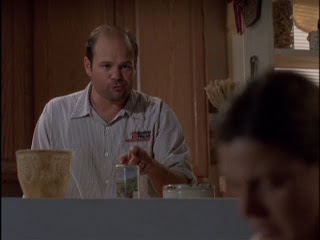
The Infidel is the comedic story of Mahmud Nasir (Omar Djalili), Arabic-British citizen, a man who we Jews would refer to as a “reform” Muslim in his practice of faith. He has a family; a wife who wears trendy clothes and is obsessed with exercise, a young daughter who likes to play jihad with a toy sword, and an older son who is about to get married to his more strictly traditional girlfriend, as soon as he can get permission from her step-father, an Islamic extremist. Mahmud has just lost his mother, part of a somber tone that the film tries to include to balance the sometimes outlandish comedy. In the process of cleaning out her house, he encounters a stubborn black cab driver named Leonard Goldberg played wonderfully by The West Wing’s Richard Schiff, and finds adoption documents that lead him to finding out that his life as Muslim Mahmud Nasir actually began as Jew Solly Shimshillewitz.
This reviewer cannot speak much on the accuracy of the portrayal of Muslim culture, though it certainly is given more dimensions on screen than Judaism is, by showing moderates, extremists, and those that are lax in practice of many kinds. A concept of Islam as only extremists spread through the western world since 2001, and this film certainly combats that through both comedy and drama. “Extreme”, Hassidic Jews however are shown as the vast majority of Judaism, with the only balance being a complete polar opposite in the form of secularized, bar mitzvah disco-ers. Seemingly the entirety of Judaism here is an Anglo-Judaism, perplexingly simplified and completely ignoring the Sephardi (Spanish) or Arabic Jews, a crossover aspect that could have been mined for more heart and interest here.
There is a political strain to the film which is unavoidable when dealing with Islamic-Jewish relations, most notably the subtle and not-so-subtle ways the Israeli-Palestinian conflict is addressed. At the rally where Mahmud burns a yarmulke he’s discovered to be secretly wearing, the crowd is predominantly white, middle-class college students. This is a sad truth witnessed firsthand and a subtlety that the filmmakers did get right. Also, in a scene at a bar mitzvah, Mahmud gets pressured into signing a petition to make the BBC correct their strong anti-Israel slant, stating that the state has a right to exist and assert its power. The comedy of the scene stems from us knowing how much he has been trained to hate Israel, something that many on both sides of the religious/political spectrum may be squirming in their seats while laughing at. Leonard himself is a staunch supporter of the state of Israel and a big conflict scene between he and Mahmud is hinged on this. Many of his early scenes are accompanied by a rendition of “Hatikvah”, the Israeli National Anthem. It comes as no surprise to find that Erran Baron Cohen, brother of Sacha (aka Borat aka Bruno aka Ali G), scored the film as he has done for his brother’s just as controversial films.
There is still ample silliness along the way, despite the many tightropes the film has to walk to not offend too many people. A scene of Mahmud telling a made up story about Rabbi Akiva at the bar mitzvah, Mahmud’s Imam thinking he is gay, a female friend in a burqa seen jogging or dancing, or a subplot about a missing 80’s pop star all come to mind. The Muslim and Jewish stars of the film say “Christ” consistently, raising questions about whether this is an intentional joke or a matter of popular current slang. The film’s problems come to the fore when it tries to balance all that with the dramatic arc taking place. There is a real struggle for this man who lost both sets of parents, and whether Jewish or Muslim he is a man that needs guidance. He wants what is best for his family, and is respectable for this very reason- even when hiding the truth from them. Yet we get a clichéd comedy-farce ending that completely crashes; a disappointing ending to a film with moments of promise. It has shades of the ending to Adam Sandler’s Billy Madison more than anything else, except sadly not as successful in humor or execution (Your personal view on that film will inform how much of an insult this truly is).
Surprisingly taken for granted here is the philosophy that one that is born a Jew is a lifetime Jew, or similarly with Islam. This is a point I found intriguing, considering how lax in practice most of the characters on screen are. The resulting message seems to be about striving for middle-ground acceptance no matter your religion, as long as it is from Abraham. The film, having originated in England, has gained international attention and screened recently in the states as part of the 2010 Tribecca Film Festival. Audiences of all races seem to find something they can laugh about, whether with a passing knowledge of Islam, Judaism or both. However, while many Arab countries have begun distributing the film, Israel has yet to make plans to bring it to its shores.
The Infidel is available now On Demand and in limited release in The U.S.
**1/2 Two and a Half Stars
Tuesday, May 4, 2010
The Lovely Bones - "We're Boned"

At the end of it all we get into Staff Picks, films we recommend based on a theme. This time covering "smaller films after bigger films", where filmmakers make a smaller film after their big blockbusters or career highs.
Give it a listen.
This is my second appearance on the show, the first of which I forgot to post here. So expect that one up soon!
Thursday, March 4, 2010
Cold Souls - "Soul Searching"

Cold Souls is available on DVD this week.
Question to my readers: would you prefer I reprint the articles in full, or keep things neat by just providing a link to the original page? Comment below.
Monday, January 25, 2010
Avatar - "The Battles Yellow Spaceship Takes Them To Pepperland's Blue Meanies"

Quite predictably, the film is filled with the stereotypes of this type of picture. The military leader who Jake turns on to fulfill his destiny as “the one” and reveals himself as the ultimate villain, the small band of outsiders who assist Jake, the foreign woman he falls for and whose native people he saves, the man she was supposed to marry that first is opposed to this outsider but bows his allegiance to him after being bested, etc. Naturally everything wraps up in a nice little package. The plot is hardly a notch above what one may find late at night on the SyFy channel.
The dialogue is even worse. This reviewer would like you to take a moment to look up any quotes from the film. Any at all. Now simply read them. Here are some of my favorites:
Neytiri: You are Omaticaya now. You may make your bow from the wood of Hometree. And you may choose a woman. We have many fine women. Ninat is the best singer.
Jake Sully: I don't want Ninat.
Neytiri: Peyral is a good hunter.
Jake Sully: Yes, she is a good hunter. But I've already chosen. But this woman must also choose me.
Neytiri: [smiles] She already has.
[They kiss]
Jake Sully: I don't want Ninat.
Neytiri: Peyral is a good hunter.
Jake Sully: Yes, she is a good hunter. But I've already chosen. But this woman must also choose me.
Neytiri: [smiles] She already has.
[They kiss]
Also, Col. Quaritch: This low gravity makes you soft. You get soft and Pandora will shit you out dead with zero warning.
What’s worse than the line written on a page is how they are delivered. Sam Worthington has an Australian accent for 90% of the movie but is supposed to be American. The Na’vi call the humans “sky people” but are otherwise able to speak English quite well. Each subsequent Na’vi who spoke English further drove home the idiocy of having such nonsense phrases. The entire concept of Na’vi speaking English in the first place is nonsensical until we learn that Segourney Weaver as Dr. Grace Augustine (who I believe is also the name of amnesia surviving murderess on some daytime soap opera) at one point had a school for them. Though apparently only the lead female, Neytiri (Zoe Saldana) and her mother attended it.
Giovanni Ribisi, an actor whose work I usually enjoy, has absolutely nothing to do the entire film. The resolution of his character is literally a sad look. Ribisi’s character, Parker Selfridge (I think he was the prom king on Beverly Hills 90210) wants to tear up the Na’vi’s hometree for a rare mineral called Unobtaneum. This is Science Fiction and any ridiculous name is pretty much game. But calling an unobtainable mineral Unobtaneum is stupefyingly obvious, something that Cameron seems to not care about holding back from at all during the film. After all, we are told about it by a selfish character named Selfridge. And some of the first words we hear in the film are “You are not in Kansas anymore… you are on Pandora”, which means that apparently in the future that a phrase that has permeated the consciousness to mean “you are no longer at home” has to be explained with a follow up to tell you where in fact you are.Navi is a Hebrew word that means prophet. This may be the most subtle thing about the religion and spirituality that Cameron has laid before us. It is an anti-jingoistic combination of every colonized native nation from recent history, somehow excepting Islam. This is bizarre, since the parable is obviously a reflection of the current occupation by western countries of oil-rich Middle-Eastern countries. Perhaps parable is too strong a word, since it is sitting on the surface the entire time, to the point of the term “shock and awe” being used by the military here. But this still seems like a backhanded love letter to “native religions”. Of course they are “wise” but they don’t wear clothes (perhaps the technology just doesn’t exist yet to put some pants on?) and they cannot possibly fight back with anything more powerful than spears and arrows. That is, unless you include the deus ex machina that literally comes in the form of the animals we are taught to fear and then appreciate rallying for the forces of the planet. Of all the religious concepts that have been so apparently plucked for use here, modesty is not one of them, and so any Abrahamic religious concepts also go out the door with it as well.
The one thing the film has going for it is the technology behind it. The performance capture system that has been developed for this film is in fact the next step for the technology and James Cameron has to be applauded for taking the time to shepherd it. Give the man a technical Oscar and nothing more. Compare this to Robert Zemeckis’ A Christmas Carol from this year (or his other recent films) and you’ll see that while that was intentionally a performance captured cartoon, it doesn’t hold a candle in terms of communicating movement or acting. The tech on display here is now a step beyond the previous standard, Gollum from The Lord of the Ring films. But how much more impressive is it than Peter Jackson’s King Kong himself, who Andy Serkis also portrayed in the performance capture studio in 2005? Perhaps the five years in the making Avatar finally got off the ground because Cameron was convinced the technology existed once Peter Jackson’s Weta Digital developed it. After all, Weta Digital is one of the lead visual effects studios on Avatar. Anyone who tells you that what is on display in this film is unlike anything they’ve ever seen hasn’t been paying attention to creature effects animation since 1993, when Jurassic Park set the (still holding up against many successors) bar. The film also makes a complete misstep by having the characters (and supposedly the audience by extension) have their breath taken away about halfway into the film by some floating mountains. But the joke is, the sometimes impressive world of Pandora has a million and one things that we the audience have already swooned over at this point which crown any kind of anti-gravity rock piles. It is a completely superfluous scene that serves only to set up the silly zone of electrical disturbance.
But hey, it’s in 3-D! Obviously, the thrill of the entire film is the 3-D itself. One of the best films of this past year was Pixar’s Up, which like many other CG animated films released recently, was presented in 3-D theatrically. The beauty of Up in 3-D was that there was an added depth to the visual spectrum, an extra element that could immerse you that much more in the world. It was never obtrusive or in your face. One might forget that they are witnessing 3-D in action, and at the time of seeing it I lauded such use of the tool as the future of the medium. At times Avatar falls into this added depth of field, but just as you settle into it, the balance is upset by psych-out gags that made 3-D tiresome fifty years ago. If there is one reason to see the film, it is to see it in 3-D. Unfortunately almost three hours of this, even with updated technology, still gave this reviewer terrible eye strain.
James Cameron can’t separate himself from the same themes, obsessions and holes he falls into every time including but not limited to: evil corporations, mech-suits, tough as nails females, competing male suitors who are wild cards, and an idealized idea of what a future/space soldier is. One should be clear though that just because there are archetypes at work here doesn’t make the film bad. The Matrix, the “Avatar of its decade” if you will, followed a somewhat similar path. However, what separates the wheat from the chaff is how they are utilized. While the Matrix relied on a strong story that could lend itself to both popcorn adventure and subtle nuanced concepts augmented by groundbreaking visuals, Avatar uses the visual artistry on display to distract the audience from a hollow morality play that not only is familiar, but heavy-handed. It is a blindfold in three dimensions.
** Two stars – Watch it if you Must.
Avatar is now playing in theaters. It won the Golden Globe awards for Best Director and Best Picture – Drama.
Monday, January 4, 2010
9 - “Denyin’ 9”

Screenplay by Pamela Pettler
Story and Directed by Shane Acker
The humans are all dead. Life on planet Earth is over, destroyed by an uprising of intelligent robots. All that remains are nine small sackcloth people, each numbered and given distinct personalities. Their origin is somewhat a mystery, and the lives of the first eight consist mainly of trying to avoid death at the hands of a cat-like robot creature. 9 (Elijah Wood) suddenly awakens after a long dormancy to find himself flung into this world, being brought up to speed by 2 (Martin Landau), who he meets first but is quickly captured by the creature and 1 (Christopher Plummer), an old grouch who leads the rest of the group. 9 doesn’t play by 1’s rules, and at every turn follows his own instincts about how to improve their lives and ultimately make life safe for them.
The world they occupy is a bombed out war zone, seen from their six inch tall point of view. All kinds of mechanical pieces of the world and rubble from buildings make up the dangerous world they live in. The church used as a home base is like a football stadium to these tiny numbered men (and woman). The small details and inventiveness of these backgrounds are some of the best aspects of the film. No wonder someone with a passion for production design like Tim Burton would attach himself to the project as a producer.
At its best, 9 is a film that has thrills. The adventures that these sack-people go though are engaging and never dull. The camera often sweeps around the action in such a whirly-bird way that any notions that such a tale would be better served in another animation medium (like stop-motion) are dashed quickly (though Coraline does achieve one or two of these camera moves- tremendously more difficult when not done in CG). Whether it be running from one monster or chasing another, on the whole the fight scenes are well choreographed. That is, except when too many characters are involved, and the film purposely chooses to forget a few of them for a moment. It is these conveniences that help move the plot along at its fast clip, but also contribute to a lot of plot holes and moments when the audience is expected to simply go along with it all because that is what is happening now. Ultimately too many of these scenes with “subtle” gaps in them occur, to the point of becoming the dominant form of storytelling throughout the film.
Dialogue in the film is used frustratingly in a simple manner, where it only occurs to give us a simple line to explain what is going on now. Things along the lines of:
“I’m going to go there to rescue someone now.”
“No, I don’t want you to go.”
“But I have to go to find the thing we are searching for to help rescue life as we know it.”
“Then I will go with you to help, but only so I can serve a plot device later.”
Of course, this is exaggerated. But it really feels like this is what is being said at almost every turn and it hampers the movie from achieving any cohesive emotional impact every time. You get so used to it as an audience member that when a moment comes late in the film where a moment of important planning is completely understated, you get confused. 9 hints a plan to 5, without telling him a single thing. 5 then naturally understands the entire plan, to the point where you question if 9 intended that at all in the first place. And it turns out he did. Oh well. The (almost mandatory at this point for an animated film) celebrity cast that also includes John C. Reilly and Jennifer Connelly is wasted on such dialogue.
There is a certain technological or political lesson lurking below this world, that machines will one day destroy us, or that our government will betray us and get everyone killed. Yet it is a Computer Graphics animated film. Again, why I would make a case for why this film may have otherwise been made with stop motion animation. But like the rest of the story, it is best to not think too hard about that. The film’s ending kind of makes sense, but not really. Somehow 9 knows the secret way to redeem the entire situation through a ritual that he was never shown nor was hinted at (I guess it’s just another of the instinctual gut feelings he has). In the end we kind of get a sense of redemption, an uplifting moment for the human soul, but is it really? Some of the nine sack-people have gone on to another place and we leave our remaining characters alone in this shell of a lifeless world. What do they have? What will they do with their lives from this point forth? Seemingly nothing.
9 Came out in a tough year. Not only is it unfortunately now part of the 2009 “nine trilogy” (with District 9 and the musical Nine), but it also faces stiff competition from more animated films this year than any this reviewer can recall. In any other year, 9 might be a welcome change of pace to the Disney and Dreamworks dominated animation scene. But instead, this inventive and fairly independent (Tim Burton and Wanted director Timur Bekmambetov threw their weight behind the project as producers) CG animated film is merely another one on the pile, held back by a weak script.
** Two Stars – Watch it if you Must
9 was released last week and is now available on DVD and Blu-ray Disc.
Wednesday, December 23, 2009

Tuesday, December 8, 2009
Special – “Use Your Delusion”

Written and Directed by Hal Haberman and Jeremy Passmore
Comic book movies have reached well beyond their saturation point. Advances in digital technology have enabled characters like Spiderman and Superman to come across today with their full breadth of powers on screen, wowing audiences worldwide. But there was a time in cinema when simple trickery had to be employed to make us believe that Batman could even turn his head in ‘Batman’ (1989). After the success of that film, a serious of “street level” superhero and comic-based movies were made, varying in success from Dick Tracy to The Crow to The Phantom. Hal Haberman and Jeremy Passmore’s ‘Special’ is a movie that harkens back to that low-fi 90’s era of comics on screen.
Les (Michael Rapaport) is a parking attendant who lives alone and enjoys reading comic books. He participates in a clinical study for a new medication called “Special” which is an undisclosed new form of anti-depressant. Naturally, things go awry. The tightrope that the film walks is that it’s not that Les gains superpowers; it’s that he thinks he has. Les’ own transformation as he tries to make the most of his newly found powers (aka, his decline into insanity) is well played by Rapaport, who finally shows something more than the New York thug character type casting he has mostly been relegated to. The film is make-or-break on his performance and he gives it his all, reminding me of Mickey Rourke in The Wrestler at times for some reason. Perhaps the grainy urban cinematography has something to do with it.
The upside is that the film plays with the archetypes of the hero’s journey as if Les really was going through them all to be a better savior in the end. There is the mentor figure/ doctor who is responsible for his powers (The Big Lebowski’s Jack Kehler), the supportive friends/ owners of Les’ local comic shop, the love interest/a checkout girl at the supermarket, and of course the diabolical villains who are entwined with our hero/ businessmen who engineered the drug. Unfortunately, these same archetypes make for easy stereotypes. The businessmen, despite trying to convince Les that he is imagining everything, really do act like Lex Luthor-style scumbags. They drive around in a limo and the main one is named Jonas Exiler (Paul Blackthorne), who looks and acts like a low rent Hugo Weaving. It always feels like he one step away from suddenly strapping Les to a table with a slow moving laser pointed at him. The comic book store-owning brothers Everett (Robert Baker) and Joey (Josh Peck) are such poorly written clichés that they could very well have been Walt and Steve-Dave from an early Kevin Smith film. They treat their customers like crap and spend their time debating meaningless topics or getting high. Only the doctor is given anything to work with, caught in the middle of a company who wants to make money and his allegiance to the health of his patient.
The idea of a person with no powers thinking they can save the world is nothing new. This story takes it one step forward, as psychoanalysis of someone like Batman in the real world would always lead to the conclusion he must be delusional. Here we see how a person who just goes around tackling those that he thinks are criminals would just end up going down an extremely destructive path. But in the end it all feels like something we’ve seen before with a slight twist that isn’t enough to save it. If the film stuck to its guns and allowed Les to die or “lose” in the end, we would feel the weight of a moral lesson. Instead, the film just errs on the side of super-fiction, giving us a hero triumphantly walking away and a villain clenching his fist and saying “Bah! Next time!”
** Two Stars – See it if you must
After existing in limbo for several years, Special is now on DVD.
Thursday, November 19, 2009
Star Trek – “More Like, Start Wreck”

Directed by J.J. Abrams
Written by Roberto Orci and Alex Kurtzman
A trend has arisen in films recently that in order to reboot a concept, you have to go back to the beginning. Some people see this as “back to basics”, but it seems others view it literally. Tell the origin. Show us how Macgyver first acquired a paperclip, how Big Bird moved to Sesame Street. It has worked to varying degrees for Batman, James Bond, and now- Star Trek. Rebooting a franchise that has a rabid fanbase is a tall order. But I’m not here to review whether fans were pleased. I want a good film. For the second time this year, the masses who demanded I see a hit summer blockbuster were proven to have no concept of what makes good cinema (the other, for the record, was the utterly terrible “The Hangover”).
Much like with ‘A Serious Man’, which made me wonder if non-Jews could possibly understand the film, similarly I would question if people who have never cared about Star Trek would begin to now. The new film is so deeply trying to reference the past incarnations of Star Trek that I began to play a game: Try to ignore the winks and nudges to see if anything made sense. Sadly, the answer is “no”. While the film admirably tries to get out of the rut set by the last several Star Trek films, everything ultimately comes down to story. Maybe I expect too much from a film getting back to the extremely campy basics of the original series, but when the concept of “logic” is thrown around endlessly surely they must have considered factoring the concept into the screenplay?
I constantly found myself questioning motivation for scene after scene where the only answer is “because it would be cooler that way” or “this one is for the fans” (what follows is a series of spoilers). Why, if the recruits haven’t reached the Federation academy yet, are they dressed in military attire in the bar scene where we first meet the adult James “thrice cliffhanger” Kirk? And why are they in Iowa at all when they’re out of towners on their way to school in San Francisco? What does Kirk study at the academy once he’s there, besides being a douche bag, and how did he sabotage the programming of the “Kobayashi Maru” when it’s clear he has no engineering skills whatsoever? I could go on, and I will. Why does Scotty get beamed to the Enterprise with Kirk, when he’s clearly been assigned another active duty, and for that matter, why is he then instantly a crewmember? Also, he is apparently the only engineer on the ship, despite the presence of many others, because he is both in charge of the transporter and the engines as different convenient moments. Here’s another one: Why does Captain Pike request the use of any bridge members who have combat skills to beam down and stop the Vulcan planet drill when he has an entire security team as part of his crew? What sense does it make to remove the ship’s pilot for this duty instead? Why does chief medical officer “Bones” McCoy hang out on the bridge in the second half of the film instead of being in the sick bay? And for that matter, he’s only afraid of space travel in the first scene but is totally cool with it from then on? The biggest one that irked me was why is Spock’s human mother on the council for the culture of all of Vulcan? The list just goes on and on but I think the point has been made.
The actors do their job with the material given; mostly acting as reflections or referential mouthpieces for the original cast (everyone has a catch phrase they have to utter at some point). The technical side of the film is very admirable. I actually came to appreciate the cinematography on the whole, lens flares in every shot and all. Unfortunately, when I’m sitting there thinking to myself “hey, there’s no lens flare in this particular shot” I am obviously being taken out of the cinema experience. Production design and costumes play a big role here as well, and do a good job in both updating and referencing the original series. These aspects, as well as the excellent CGI, help to pull the film from the one star range to get some points for production. I will also say that the direction of J.J. Abrams is good as well. The man knows how to tell a story and everyone knows this film was a challenge from the beginning. However a producer and director of his renown knows that story is king, and this script was a stinker almost all the way through. Suspension of disbelief is an essential part of cinema, and despite accepting this future world full of starships and aliens, I just couldn’t get behind it being so highly illogical.
** Two Stars – Watch it if you Must
Star Trek is now available on DVD and Blu-ray.
Saturday, November 14, 2009
Good Hair – "Not Quite Bangs For Your Buck"

Directed by Jeff Stilson
Written by Chris Rock & Jeff Stilson and Lance Crouther and Chuck Sklar
Chris Rock has grown up. Now a father with two young children, he has gone the way of many comics before him to make films that downplay his once wilder material in favor of calmer, family friendly fare. The exception being, instead of lowering himself into dreary morality tales with lowest common denominator laughs, he has stepped forward to make a love note documentary to his daughters. Rock feels charged with a quest to investigate the varied aspects of black hair culture after one day being asked, “Daddy do I have good hair?”
Rock assembles black people of all kinds to discuss their viewpoints on the subject of African hair. Celebrities, beauticians, product manufacturers, average customers and even Dr. Maya Angelou weigh in with their thoughts. Unfortunately the Puffy “P-Diddy” Combs is not present, a reflection of how despite being a Chris Rock film, the focus is not on humor. The majority opinion of those who are present seems to be that nappy equals bad, while doing anything it takes to have straight, smooth hair equals good. Everything under the sun is analyzed, from chemical relaxers to weaves of false hair. The industry itself is taken to task, first for predicating the use of dangerous toxins as sodium hydroxide and second for not having enough Black people profiting off of such a uniquely Black market. As the film weaves between Rock exploring the outlandish pain and price men and (mostly) women are willing to put themselves through for the sake of a western concept of hair, the film ends up uneven.
The plot is loose enough to run your hands through, and the editing could have used a good braiding. Whether it was a lack of usable footage or a directorial choice, the cutaways to Rock, especially during interviews, are often distracting and serve no purpose on screen. Strands of intrigue are intercut with an unnecessary sub-television worthy competition for the best hair stylist at an annual hair convention in Atlanta. None of the contestants are relatable and reflect the industry itself in being out of touch with reality. Too much time is devoted to just repeating the same few facts we are given about them. In a film about hair, do we need to see one of the contestants subject himself to Botox injections? The lead up to the competition is supposed to give the film its narrative thrust, but it ends up boring compared to the facts and opinions of the bigger subject at hand. And watching the competition itself, which ends up not being about the hair at all, feels totally unnecessary. We get that the industry is backwards and ridiculous without the lives of the contestants illustrating it for us.
The best bits are when Rock is trying to get to the root of it all. He investigates the subject of “weaves”, a fashion of wigs and false hair that are woven into natural hair that is immensely popular right now. Its origin is that most come from India, where the hair is shorn as part of religious ritual. The Temple sells the hair to the highest bidder, who then exports it and sells it for thousands of dollars apiece. Apparently, the Temple is second only to the Vatican in profits. Meanwhile at your average beauty shop in Harlem, normal American women are taking out layaway plans on hair pieces that they can’t afford, and Rock is there to ask “why?”
The answer seems to be nothing more than striving to be fashionable and accepted. This is an interesting aspect of it all, because as it is pointed out, some people are making hair a priority over food, rent or education. Rev. Al Sharpton speaks out against this, but at the same time, he is sporting the same slick hair he has had since James Brown took him to the White House to meet with President Reagan. Could Sharpton be taken seriously by the President if he walked in with natural African hair? A group of high school girls interviewed make the point that if one was to go to a business meeting wearing a suit and tie with a huge afro, that it would seem to be a contradiction between proper and inappropriate attire. As with most documentary subjects, a solution to the bigger problem is not given. Rock and Director Jeff Stilson do a fair job laying out the issues at hand (why would someone put a dangerous chemical all over their three-year-old daughter’s head?), but with shoddy technical work, and too much concentration off the narrative thrust, the film isn’t as hair raising as it intends to be.
**1/2 Two and a half Stars – Take it or Leave it
Good Hair is in select theaters now.
Wednesday, November 11, 2009
The Last Days of Disco - "Disco Sucks"

Written and Directed by Whit Stillman
1998’s The Last Days of Disco is the third and last film from once promising indie director Whit Stillman. His previous films, ‘Metropolitan’ and ‘Barcelona’, follow a formula of the political and sexual relationships of a few well to do characters (The three films are affectionately referred to as “the yuppie trilogy”) communicated mostly through conversation. You could tell that the director was trying to unify his filmography at this point, having cameos by characters from his previous films but it just made me wish this film could live up to the previous two. Unfortunately, ‘Disco’, while following the same formula, falls flat. It seems Stillman’s career stalled on a sour note.
The film is a stilted smorgasbord of characters living on the edge of the early 1980’s “Disco Sucks” movement who still believe in the glamour of nightclubs. Chloe Sevigny and Kate Beckinsale star as researchers for a publishing company hoping for upward mobility, but they spend most of their time at an exclusive downtown Discotheque. They kind of knew each other in college but not really and somehow end up working at the same job and becoming friends and roommates despite not liking each other. They’re joined by Chris Eigeman as the club’s junior manager, who is smarmy enough to tell women that he’s suddenly gay instead of breaking up with them. Eigeman, who is great at being a lovable bastard, joins Sevigny in trying to do the best they can with the given material. Beckinsale however never truly is able to handle the rhythm of the dialogue, which like David Mamet or (I hate to say it) Kevin Smith, has to be uniquely interpreted by certain actors.
The cast is rounded out with a Jimmy, a Josh, a Tom, a Van, and other mostly interchangeable males. Josh, played by Matt Keeslar, is a manic depressive assistant district attorney that we never actually see act crazier than reciting a hymn and who ties in the storyline of the disco being shut down by the feds due to money embezzling and drug dealing. The problem is, everything in the film plays so matter of factly. Our protagonists fall in and out of relationships without any real drama or emotional impact. There are conversations about money hidden in the basement, but we’re never really in on that aspect of the club. You can tell that Stillman is trying to show a different side of the disco scene than just polyester and John Travolta (and you know this because its part of the film’s concluding summation spoken by Josh) but it seems he just can’t decide whether he wants to have our characters at the epicenter of the end of disco or casually pass through it. At one point the film cuts away to historical footage of disco records being blown up in a baseball stadium and the riot of joy that ensues. But it all seems terribly shoe horned in when the rest of the time we just follow the general malaise of our disco goers, living in Studio 54 as interpreted for a TV sitcom.
Especially strange to me (and this is really no fault of the film or its’ makers) is that only two years later Chloe Sevigny and co-star Matt Ross would be appearing in a film that similarly addresses early-80’s yuppiedom in the adaptation of Bret Easton Ellis’ novel American Psycho. But where ‘Psycho’ gives us a strong parable of the excess of the era, ‘Disco’ relegates any negativity to the background. Mostly we just watch our protagonists float through night after night talking, and occasionally dancing. The dancing is probably the best part of the film, set to an excellent era specific soundtrack, the film shows you life as it was- not everyone was a boogie king- people just wanted to have fun. Unfortunately, instead of grooving next to a dance partner briefly and then forgetting about them, the film insists on unifying everyone into a group. You never really believe these people would continue to interact, especially when you take into account how many of them supposedly attended college with one another.
** Two Stars – Watch it if you must
The Last Days of Disco is available now in a nice special edition DVD recently released by The Criterion Collection.
Tuesday, November 10, 2009
Third Watch - Season 2
Originally published as part of CHUD.com's Chewer Reviewer #7.
 THIRD WATCH: THE COMPLETE SECOND SEASON
by Saul Sudin
STUDIO: Warner Home Video
MSRP: $59.98
RATED: Not rated
RUNNING TIME: 989 minutes
SPECIAL FEATURES:
Gag Reel
The Pitch
It’s like ER, but more portable.
The Humans
Michael (Stargate: Atlantis) Beach, Coby (The Game) Bell, Bobby (Snakes on a Plane) Cannavale, Amy (Law & Order: Trial By Jury) Carlson, Eddie (Baywatch Nights) Cibrian, Molly (Bionic Woman) Price, Kim (24) Raver, Anthony (Tropic Thunder) Ruivivar, Skipp (Oz) Sudduth, Jason (Zodiac) Wiles
Created by: Edward Allen (Criminal Minds) Bernero & John (ER) Wells
The Nutshell
Follow the adventures of several fictional 55th Precinct New York City Police, Firemen and Paramedics as they handle the “third watch”, the afternoon shift of 3-11 PM. Typical days include saving kids, mourning kids, dealing with personal issues, ending up in the hospital, and tackling the typical issue of the week in a cliché ridden style that hasn’t evolved on television in 30 years.
 Third Watch's opening credit sequence and theme music brought to you by the movie 'Go'.
The Lowdown
The Second Season of Third Watch opens with an episode that deals with a rich man being kidnapped and buried alive, a mute homeless child, a gut shot fireman, a wandering geriatric woman and the adoption of a cockatoo. Yet I cannot say it was a pulse pounding 42 minutes. The tone and style is almost identical to John Wells’ previous show, ER, and comparisons couldn’t help but be drawn as the episodes went on. I would venture to say that Michael Beach’s character is almost identical to that of Eriq La Salle’s on ER.
 "You'll see! One day I'll be the cop! And we'll have vampires living among us! And then we'll fight demon women... and shapeshifters!"
I had never seen an episode of Third Watch before this review, but the premise is simple enough to follow and at no point did I feel like I was missing something. The episodes contained herein represent the 2000 – 2001 season, and while it is strange to see how life was being portrayed here in a pre-9/11 New York City, it never truly became fascinating. The main issue with the series seems to be that the day to day adventures of these 10 NYC public servants is presented in a way not unlike what we have seen time and time again with a “story of the week” formula and wooden emotional moments. The show apparently ran for six healthy seasons and had a solid following so my only guess is that it really hit a stride after September 11th, considering the subject matter of the show and that it was already on for two whole seasons prior. A little research shows that they won a Peabody award for an episode that addressed the crisis by being taken from the accounts of public servants on the scene on that day.
 "No one's looking...go ahead and whiz on it."
Halfway through the season, Bobby Cannavale’s character “Bobby” (what a stretch) is killed by his junkie childhood best friend, played by a guest starring Rick (Band of Brothers, Fringe) Acevedo. Flashbacks are involved, as are Bobby debating his life in a boxing ring with his father who left him as a child. Carla from Scrubs is the woman who mourns him. Apparently Cannavale wanted to be released from the show due to a lack of storylines, and I can’t blame him. The cast is bursting at the seams with 10 regulars, all of whom are vying for air time, and all of whom get shortchanged in the long run. What strikes me odd is the necessity of having 4 policemen and 4 paramedics as main characters, while we only follow 2 firemen, one of whom is introduced as a new character early in the season. If anything, I would have whittled it down to a tight 6, with two in each category. You can either try to be realistic and take on the entire precinct as characters, or just show us individual snippets. By going the in between route, no one wins.
 "I love you, man" "I know." "I'm... dying...."
The widely regarded best episode of the entire series and winner of a Humanitus Award is “After Hours”, which comes about a third through this season. It deals with our entire cast of characters buddying up in small groups and pairs after work to just blow off steam from a particularly hard day dealing with a car full of drunken teenagers that all blew up on prom night. The episode is kind of a let down and while it did hold my attention more than its peers, it still left me unimpressed. Slowly over the course of the night each of the groups encounter other teens that, in the climax of the episode, are imagined as the teens who drunk and BBQ-ed. It all ends in a heartfelt reuniting of all our stars on the beach at Coney Island to make a bonfire and watch the sun rise. Now, as a New Yorker, I feel there are some essential things that need to be pointed out here. One, they get from Manhattan to the southern tip of Brooklyn at an ungodly quick pace. The second is that one character remarks when they arrive at the beach “we better find some wood to make the bonfire”. The next time we see them, they are enjoying said fire. However, where the hell does one find firewood at Coney Island? My only guess is they disassembled The Cyclone roller coaster, because there aren’t any trees for miles. It’s gaps in logic like this that separates the TV-NYC from the real NYC and ultimately is a failing of the show across the board to me. Like one board member mentioned of True Blood as the south from a New Yorker’s POV, so too Third Watch is NYC from a Hollywood POV.
 "Man, I need a drink. Maybe that bar from The 25th Hour is open."
A Gag Reel is the only special feature and plays like the type of thing that was put together for an end of season party by some cast and crew. Lots of flubbed lines and some dance on set, it’s nothing to write home about.
The Package
The compression of the video is very bad, and the image often looks like it was softened by a motion smoothing TV. Otherwise, production quality is typical of a weekly drama from the early 2000’s. All six discs come housed in an extra large snapper case with swinging plastic disc holders that allow each its own convenient access. A booklet lets you know what episodes are on which disc, with brief synopses. Artwork and box size is typical for WB season collections like The West Wing or ER.
OVERALL 3.0 out of 10
 THIRD WATCH: THE COMPLETE SECOND SEASON
by Saul Sudin
STUDIO: Warner Home Video
MSRP: $59.98
RATED: Not rated
RUNNING TIME: 989 minutes
SPECIAL FEATURES:
Gag Reel
The Pitch
It’s like ER, but more portable.
The Humans
Michael (Stargate: Atlantis) Beach, Coby (The Game) Bell, Bobby (Snakes on a Plane) Cannavale, Amy (Law & Order: Trial By Jury) Carlson, Eddie (Baywatch Nights) Cibrian, Molly (Bionic Woman) Price, Kim (24) Raver, Anthony (Tropic Thunder) Ruivivar, Skipp (Oz) Sudduth, Jason (Zodiac) Wiles
Created by: Edward Allen (Criminal Minds) Bernero & John (ER) Wells
The Nutshell
Follow the adventures of several fictional 55th Precinct New York City Police, Firemen and Paramedics as they handle the “third watch”, the afternoon shift of 3-11 PM. Typical days include saving kids, mourning kids, dealing with personal issues, ending up in the hospital, and tackling the typical issue of the week in a cliché ridden style that hasn’t evolved on television in 30 years.
 Third Watch's opening credit sequence and theme music brought to you by the movie 'Go'.
The Lowdown
The Second Season of Third Watch opens with an episode that deals with a rich man being kidnapped and buried alive, a mute homeless child, a gut shot fireman, a wandering geriatric woman and the adoption of a cockatoo. Yet I cannot say it was a pulse pounding 42 minutes. The tone and style is almost identical to John Wells’ previous show, ER, and comparisons couldn’t help but be drawn as the episodes went on. I would venture to say that Michael Beach’s character is almost identical to that of Eriq La Salle’s on ER.
 "You'll see! One day I'll be the cop! And we'll have vampires living among us! And then we'll fight demon women... and shapeshifters!"
I had never seen an episode of Third Watch before this review, but the premise is simple enough to follow and at no point did I feel like I was missing something. The episodes contained herein represent the 2000 – 2001 season, and while it is strange to see how life was being portrayed here in a pre-9/11 New York City, it never truly became fascinating. The main issue with the series seems to be that the day to day adventures of these 10 NYC public servants is presented in a way not unlike what we have seen time and time again with a “story of the week” formula and wooden emotional moments. The show apparently ran for six healthy seasons and had a solid following so my only guess is that it really hit a stride after September 11th, considering the subject matter of the show and that it was already on for two whole seasons prior. A little research shows that they won a Peabody award for an episode that addressed the crisis by being taken from the accounts of public servants on the scene on that day.
 "No one's looking...go ahead and whiz on it."
Halfway through the season, Bobby Cannavale’s character “Bobby” (what a stretch) is killed by his junkie childhood best friend, played by a guest starring Rick (Band of Brothers, Fringe) Acevedo. Flashbacks are involved, as are Bobby debating his life in a boxing ring with his father who left him as a child. Carla from Scrubs is the woman who mourns him. Apparently Cannavale wanted to be released from the show due to a lack of storylines, and I can’t blame him. The cast is bursting at the seams with 10 regulars, all of whom are vying for air time, and all of whom get shortchanged in the long run. What strikes me odd is the necessity of having 4 policemen and 4 paramedics as main characters, while we only follow 2 firemen, one of whom is introduced as a new character early in the season. If anything, I would have whittled it down to a tight 6, with two in each category. You can either try to be realistic and take on the entire precinct as characters, or just show us individual snippets. By going the in between route, no one wins.
 "I love you, man" "I know." "I'm... dying...."
The widely regarded best episode of the entire series and winner of a Humanitus Award is “After Hours”, which comes about a third through this season. It deals with our entire cast of characters buddying up in small groups and pairs after work to just blow off steam from a particularly hard day dealing with a car full of drunken teenagers that all blew up on prom night. The episode is kind of a let down and while it did hold my attention more than its peers, it still left me unimpressed. Slowly over the course of the night each of the groups encounter other teens that, in the climax of the episode, are imagined as the teens who drunk and BBQ-ed. It all ends in a heartfelt reuniting of all our stars on the beach at Coney Island to make a bonfire and watch the sun rise. Now, as a New Yorker, I feel there are some essential things that need to be pointed out here. One, they get from Manhattan to the southern tip of Brooklyn at an ungodly quick pace. The second is that one character remarks when they arrive at the beach “we better find some wood to make the bonfire”. The next time we see them, they are enjoying said fire. However, where the hell does one find firewood at Coney Island? My only guess is they disassembled The Cyclone roller coaster, because there aren’t any trees for miles. It’s gaps in logic like this that separates the TV-NYC from the real NYC and ultimately is a failing of the show across the board to me. Like one board member mentioned of True Blood as the south from a New Yorker’s POV, so too Third Watch is NYC from a Hollywood POV.
 "Man, I need a drink. Maybe that bar from The 25th Hour is open."
A Gag Reel is the only special feature and plays like the type of thing that was put together for an end of season party by some cast and crew. Lots of flubbed lines and some dance on set, it’s nothing to write home about.
The Package
The compression of the video is very bad, and the image often looks like it was softened by a motion smoothing TV. Otherwise, production quality is typical of a weekly drama from the early 2000’s. All six discs come housed in an extra large snapper case with swinging plastic disc holders that allow each its own convenient access. A booklet lets you know what episodes are on which disc, with brief synopses. Artwork and box size is typical for WB season collections like The West Wing or ER.
OVERALL 3.0 out of 10
Subscribe to:
Posts (Atom)

